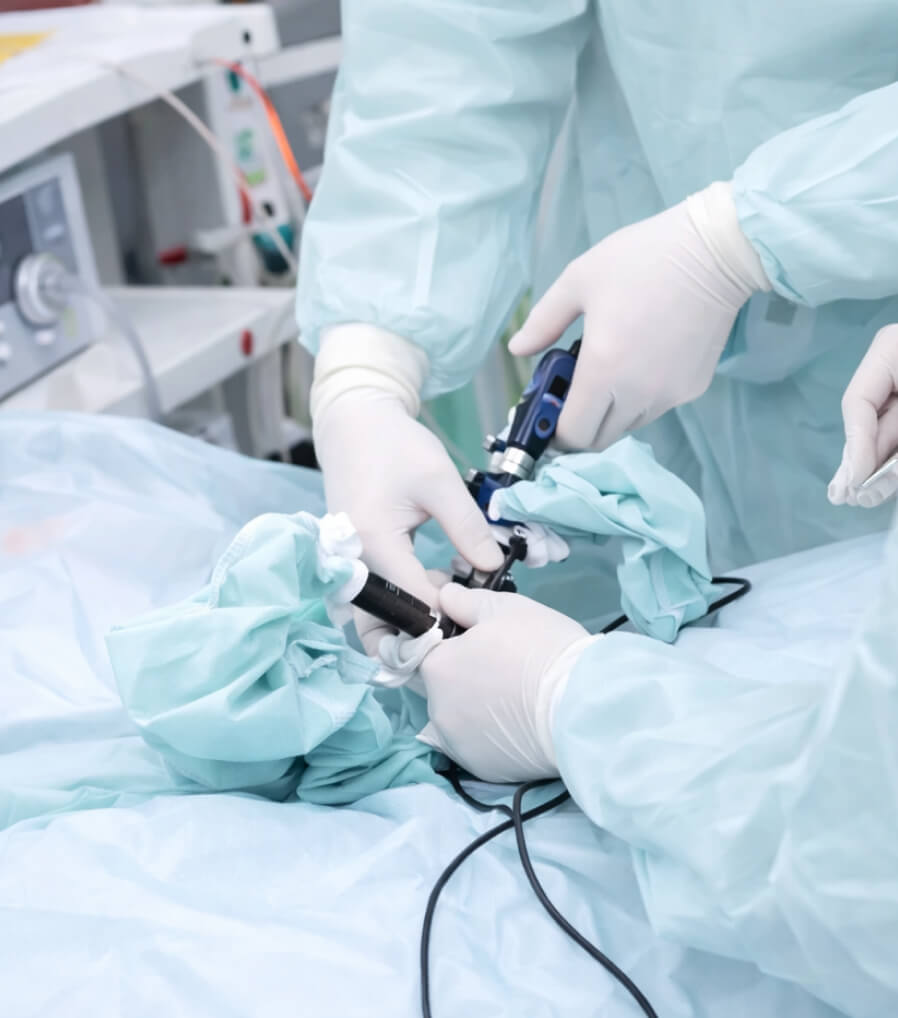
Kidney Stone Treatment and Prevention

Learn the pros and cons of common kidney stone treatment options as well as steps you can take to keep stones from forming.


Four Typical Kidney Stone Treatments

A patient anxiously waiting for his kidney stones to pass
A physician performing a shockwave lithotripsy procedure to break up kidney stones
A physician performing a ureteroscopy procedure to clear kidney stones
A physician performing a percutaneous nephrolithotomy procedure to clear kidney stones

1. Watch and Wait1

01 / 04

Many doctors choose to simply monitor small stones that aren’t causing severe pain, blocking urine flow, or showing signs of infection.
For stones in the ureter, your doctor may prescribe medication and advise you to drink more water to help the stone pass on its own.
For stones in the kidney, you’ll likely have regular checkups and imaging to keep tabs on the size and location of your stone.

2. Shockwave Lithotripsy (SWL)2

02 / 04

During SWL, shock waves are aimed at your kidney stone from outside your body, breaking it into pieces that you must then pass on your own.
First, you lie on a table in a specialized treatment room and are sedated or placed under anesthesia. Next, your doctor uses imaging equipment to locate your kidney stone, then positions you so that a special machine can be directed at your stone.
The machine will release hundreds or even thousands of high-energy shock waves into your body, pulverizing the stone into smaller pieces.

3. Ureteroscopy (URS)6

03 / 04

URS is a more direct way to break up kidney stones. While you’re under anesthesia, a thin tube, guided by a tiny camera, is threaded through your urethra and bladder, into your ureter and kidney.
Once the stone is located, a laser beam is applied directly to the stone to break it into small pieces.
At least some of these pieces may be collected in a small basket, but fragments and dust are often left behind. You must then either pass them on your own, or they will remain inside your body, where they may cause other issues.

4. Percutaneous Nephrolithotomy (PCNL)10

04 / 04

PCNL is a more invasive surgical procedure that’s typically used to remove kidney stones that are very large and/or complex.
While you’re under anesthesia, an incision is made in the skin of your back. Then, a specialized needle, guided by X-ray or other imaging, is inserted into your kidney. Next, a thin tube is placed along the path of the needle.
Then, a laser or ultrasound device is threaded through the tube, into your body, and is then used to break up your kidney stones. Finally, the stone fragments are removed through the tube.

00 / 00

The CVAC System Procedure: A New Standard

The revolutionary CVAC System procedure includes continuous vacuuming, designed to help your physician completely remove kidney stones.11

The only minimally invasive option

that provides exceptionally high stone clearance.11-13

Lower chances

of needing to pass stones or deal with the risks of leftover fragments.14

73% fewer* unplanned post-procedure health events Unplanned health events are ER visits, hospital stays, or additional procedures likely due to stones left behind after your initial procedure. up to two years after treatment.14

Small chance of infection,

similar to other minimally invasive treatment options.9

Stent discomfort:

A ureteral stent will likely be placed after the procedure to help with drainage.
Potential benefit

Potential risk

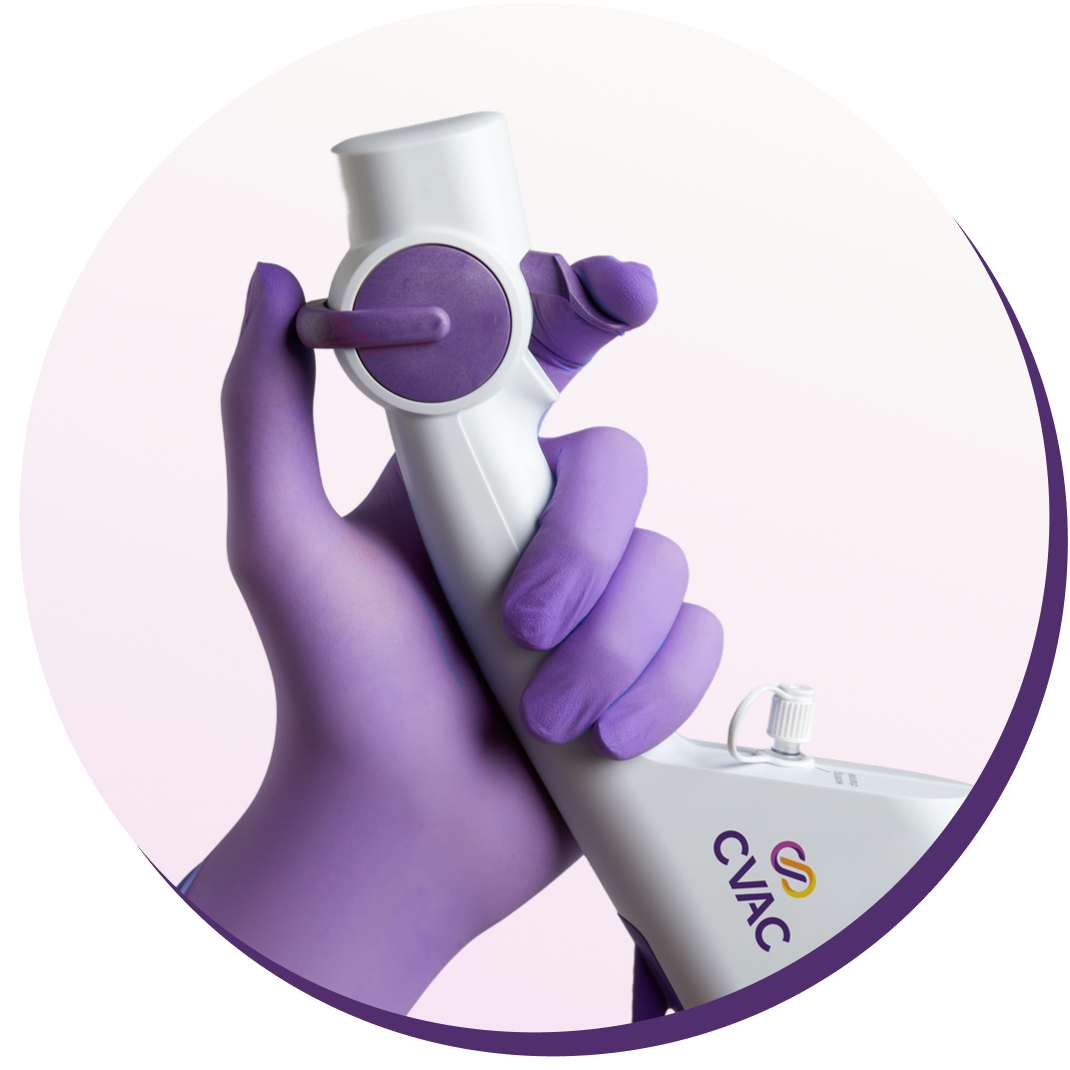
A physician’s gloved hand holding the handpiece of the CVAC System kidney stone treatment

How to Prevent Kidney Stones

Kidney stones form when certain minerals are concentrated in your urine. Diet and lifestyle changes may reduce your risk, but even if you follow these steps, stones may still form.1

Stay Hydrated All Day

Drinking plenty of water will help to dilute the concentration of kidney-stone-forming minerals in your urine.1

Limit Animal Protein and Salt

These foods contribute to kidney stone formation in many ways.15 Reduce or eliminate meat and keep sodium to a minimum.

Eat More Plant-Based Foods

People who eat more fruits, vegetables, whole grains, beans, nuts, and seeds tend to have fewer kidney stones.15

Maintain a Healthy, Active Lifestyle

Whether you enjoy daily walks or hitting the gym, higher levels of physical activity are associated with a lower risk of kidney stones.16

Frequently Asked Questions

Get answers to your most pressing questions about kidney stone treatment and prevention.

These terms refer to how your doctor accesses your kidney stones during treatment. “More invasive” treatment requires an incision through your skin to provide direct access. “Minimally invasive” means a thin line is threaded up through your natural urine outflow pathway (urethra), then through your bladder, and into your ureter and kidney. No incisions required.

No. No matter what kind of treatment you receive — or what the results of that treatment are — it is always possible to form new kidney stones in the future. However, studies show that leaving less stone behind is associated with fewer unplanned post-procedure health events, such as ER visits, hospital stays, and additional procedures.†,14

Overall, 30-50% of people who have a kidney stone will experience another one within five years.17 But ultimately, it depends on several factors:

  • Family history — People with a family history of kidney stones are more likely to experience repeat episodes within a shorter period of time.18
  • Underlying medical conditions — If you have certain conditions, such as diabetes or hyperparathyroidism, your kidney stones are more likely to come back faster.19
  • Diet and lifestyle — Staying hydrated, eating healthy, and exercising can all help to stave off kidney stones.14,15
  • What type of kidney stones you have — Uric acid and struvite stones are more likely to come back than calcium oxalate stones.20

You and your doctor will determine which kidney stone treatment option is right for you based on:

  • Your procedure goals — If you would prefer to have all kidney stone fragments and dust removed from your body during a minimally invasive procedure, talk to your doctor about the CVAC System. It’s the only technology specifically designed to help your physician achieve this outcome.10
  • The size, hardness, location, and number of kidney stones you have — For example, if your kidney stones are very large, hard, or complex, your doctor may be more likely to recommend URS, PCNL, or the CVAC System procedure rather than SWL.1-7,9
  • The symptoms you’re experiencing because of your kidney stones — If you’re experiencing pain, bleeding, nausea, or signs of infection, your doctor will likely recommend having your stones treated and/or removed. But your doctor may also recommend treatment for stones that are not causing symptoms to stay ahead of potential problems.
  • Your lifestyle factors and preferences — Your doctor will take into account everything from your overall health, age, and medical history to your preferences regarding ureteral stent placement.

There is no universal definition for “stone-free” — and the term is somewhat misleading. It does not necessarily mean there are no kidney stones or stone fragments left inside your body. “Stone-free” typically means there are no stones left over a certain size (such as 2 mm or 4 mm) or no stones left that could be detected by a specific type of imaging.


A more accurate and useful measurement is Residual Stone Volume (RSV) — or how much has been left behind after the procedure. For example, higher RSV (meaning more stone fragments left behind) is associated with more ER visits, hospital stays, and additional kidney stone treatment proceduresin the long run.14


So even if you achieve a “stone-free” result, you may have many small stone fragments left behind that add up to a higher RSV — and higher risk for those unplanned post-procedure health events.14

The CVAC System procedure is the only minimally invasive kidney stone treatment option designed to help your doctor completely remove kidney stones.11

Studies have shown that the CVAC System is more effective than standard ureteroscopy (URS) as well as other surgical tools that include suction.12-14

Ready to Leave Your Kidney Stones in the Dust?

Use our locator to find a CVAC System physician near you — and be sure to ask for the CVAC System procedure!
* Compared to standard ureteroscopy
Unplanned post-procedure health events are ER visits, hospital stays, or additional procedures (limited to additional procedures likely due to stones left behind after your initial procedure).
MAC00270-02.A
  1. Cleveland Clinic. Kidney Stones. My.ClevelandClinic.org. Medically reviewed February 26, 2024. Accessed November 14, 2025. https://my.clevelandclinic.org/health/diseases/15604-kidney-stones.
  2. Johns Hopkins Medicine. Extracorporeal Shock Wave Lithotripsy (ESWL). HopkinsMedicine.org. Accessed November 14, 2025. https://www.hopkinsmedicine.org/health/conditions-and-diseases/kidney-stones/extracorporeal-shock-wave-lithotripsy-eswl.
  3. Cleveland Clinic. Extracorporeal Shock Wave Lithotripsy (ESWL). My.ClevelandClinic.org. Medically reviewed November 21, 2023. Accessed November 14, 2025. https://my.clevelandclinic.org/health/procedures/extracorporeal-shock-wave-lithotripsy-eswl.
  4. Bowen DK, Song L, Faerber J, Kim J, Scales CD Jr, Tasian GE. Re-Treatment after Ureteroscopy and Shock Wave Lithotripsy: A Population Based Comparative Effectiveness Study. J Urol. 2020 Jun;203(6):1156-1162. doi: 10.1097/JU.0000000000000712. Epub 2020 Mar 24. PMID: 31859598; PMCID: PMC7211122.
  5. McAteer JA, Evan AP. The acute and long-term adverse effects of shock wave lithotripsy. Semin Nephrol. 2008 Mar;28(2):200-13. doi: 10.1016/j.semnephrol.2008.01.003. PMID: 18359401; PMCID: PMC2900184.
  6. Cleveland Clinic. Ureteroscopy. My.ClevelandClinic.org. Medically reviewed February 08, 2021. Accessed November 14, 2025. https://my.clevelandclinic.org/health/treatments/16213-ureteroscopy.
  7. Mulk, Nauman & Zaman, Khizer & Tayyib, Muhammad & Haseeb, Abdul & Muhammad, Raza & Hamid, Muhammad. (2025). COMPARISON OF STONE FREE RATE BETWEEN EXTRACORPOREAL SHOCKWAVE LITHOTRIPSY AND URETEROSCOPIC LASERTRIPSY IN THE MANAGEMENT OF PROXIMAL URETERAL STONES. Insights-Journal of Health and Rehabilitation. 3. 850-856. 10.71000/s8gg4y36.
  8. Qiu M, Zhang T, Zhang Y, Liang T, Chen J, Gao H. Physical Techniques to Remove Residual Stone Fragments in the Urinary System. Urol Int. 2024;108(1):9-19. doi: 10.1159/000535298. Epub 2023 Nov 26. PMID: 38008076; PMCID: PMC10836958.
  9. Bhojani, N., Eisner, B., Monga, M., Paranjpe, R., Cutone, B. and Chew, B.H. (2023), Sepsis prevalence and associated hospital admission and mortality after ureteroscopy in employed adults. BJU Int, 132: 210-216. https://doi.org/10.1111/bju.16029
  10. Mayo Clinic. Percutaneous nephrolithotomy. MayoClinic.org. Accessed November 14, 2025. https://www.mayoclinic.org/tests-procedures/percutaneous-nephrolithotomy/about/pac-20385051.
  11. Matlaga B, Mueller T, Johnson B, Page J, Wolf JS, Preminger G, et al. PD10-04 PROSPECTIVE, RANDOMIZED STUDY OF STEERABLE URETEROSCOPIC RENAL EVACUATION VS URETEROSCOPY WITH BASKETING: 30-DAY RESULTS OF THE ASPIRE STUDY. Journal of Urology. 2024 May 1 [cited 2025 Nov 5];211(5S):e186. Available from: https://doi.org/10.1097/01.JU.0001008748.59024.cb.04.
  12. Cabo et. al. MP29-04: Prospective Comparison of Flexible and Navigable Ureteric Access Sheath (FANS) and CVAC 2.0 In-Scope Aspiration System for High-Volume Stone Disease, Conference Presentation, AUA 2025.
  13. Johnson, Brett A., et al. CVAC System Superior to Direct-In-Scope Suction Across Range of Stone Sizes in a Direct In Vitro Comparison of Stone Fragment Aspiration, Conference Presentation, March 2025.
  14. Stern, et al. MP16: 01 Steerable ureteroscopic renal evacuation reduces the risk of healthcare consumption events at 2 years compared to standard ureteroscopy (URS). Conference Presentation, WCET 2025.
  15. Ferraro PM, Bargagli M, Trinchieri A, Gambaro G. Risk of Kidney Stones: Influence of Dietary Factors, Dietary Patterns, and Vegetarian-Vegan Diets. Nutrients. 2020 Mar 15;12(3):779. doi: 10.3390/nu12030779. PMID: 32183500; PMCID: PMC7146511.
  16. Ding X, Du Q, Li J, Ji C, Zhang E, Hu W. Prevalence of kidney stones based on metabolic health and weight criteria: reports from the national health and nutrition examination survey 2007-2018 data analysis. Front Physiol. 2025 Jun 23;16:1625100. doi: 10.3389/fphys.2025.1625100. PMID: 40626049; PMCID: PMC12230011.
  17. Shpitzer SA, Shpunt I, Loebl N, Perl L, Enikeev D, Darawsha AE, Ehrlich Y, Lifshitz D. Risk stratification for repeat stone surgery: the role of stone composition. World J Urol. 2025 Apr 1;43(1):203. doi: 10.1007/s00345-025-05573-w. PMID: 40167767; PMCID: PMC11961492.
  18. Koyuncu HH, Yencilek F, Eryildirim B, Sarica K. Family history in stone disease: how important is it for the onset of the disease and the incidence of recurrence? Urol Res. 2010 Apr;38(2):105-9. doi: 10.1007/s00240-009-0249-6. Epub 2010 Jan 15. PMID: 20077110; PMCID: PMC2847691.
  19. Shastri S, Patel J, Sambandam KK, Lederer ED. Kidney Stone Pathophysiology, Evaluation and Management: Core Curriculum 2023. Am J Kidney Dis. 2023 Nov;82(5):617-634. doi: 10.1053/j.ajkd.2023.03.017. Epub 2023 Aug 9. PMID: 37565942; PMCID: PMC11370273.
  20. Levi O, Tsivian A, Baniel J, et al. The correlation between renal stone composition and the risk of stone recurrence. Data presented in poster format at the American Urological Association 2018 annual meeting, San Francisco, May 18–21. Abstract MP13-15.
Individual results may vary. Speak with your doctor to determine what treatment may be right for you. There are risks of complications with the CVAC System procedure including, but not limited to: perforation, bleeding, damage to ureter or kidney, pain, inflammation, infection, and/or fever. In some cases, complications may require intervention and may lead to a serious outcome. View full safety information here.
MAC00270-02.A

Contact Us for More Information About the CVAC System Procedure

This field is for validation purposes and should be left unchanged.
Checkboxes(Required)

MA00171-01.A