Kidney Stone Causes, Types, and Risk Factors

Get the basics on kidney stones — from who’s most commonly affected, to how and where they form, to symptoms you should watch out for.

An infographic illustrating how many people may be at risk of kidney stones
A COMMON ISSUE, ON THE RISE

Who Is Most Affected by Kidney Stones?

Although anyone can develop kidney stones, certain factors can put you at higher risk1:
  • Male gender: In the U.S., about 11% of men will likely experience kidney stones in their lifetime, compared to 6% of women.2
  • Family history: If other members of your family have had kidney stones, your risk goes up.
  • Repeated episodes: If you’ve had kidney stones before, you’re more likely to develop them again.
  • Dehydration: If you don’t drink enough water and other hydrating liquids, you’re more likely to develop kidney stones.
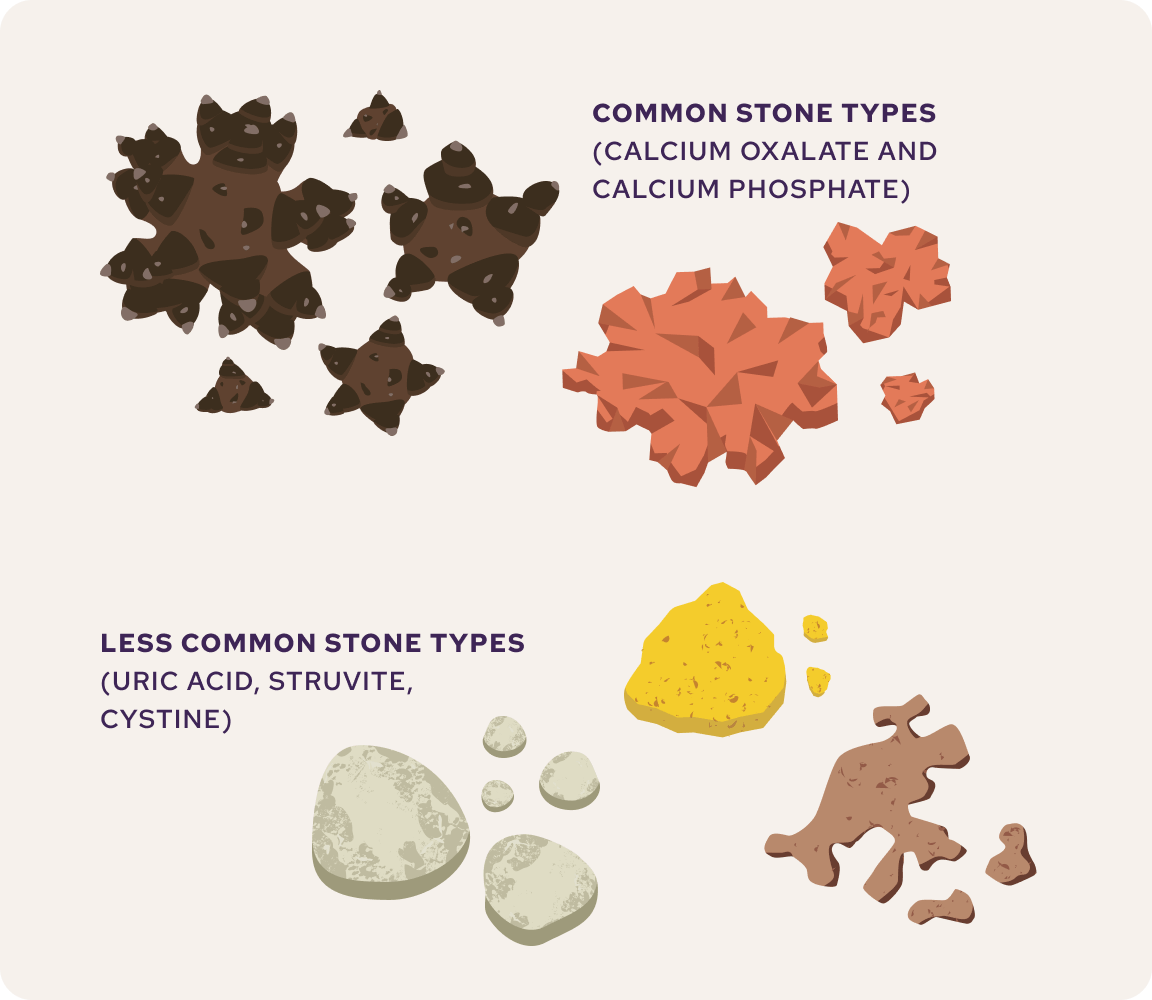
An illustration showing more and less common forms of kidney stones
TYPES AND FORMATION

What Are Kidney Stones and How Do They Form?3

Although they may look like tiny rocks, kidney stones are actually clusters of crystals, made from minerals, salts, and other waste.
When you have too much of these substances in your urine and not enough liquid to flush them out, they become concentrated and can grow into kidney stones. There are several types of kidney stones3:
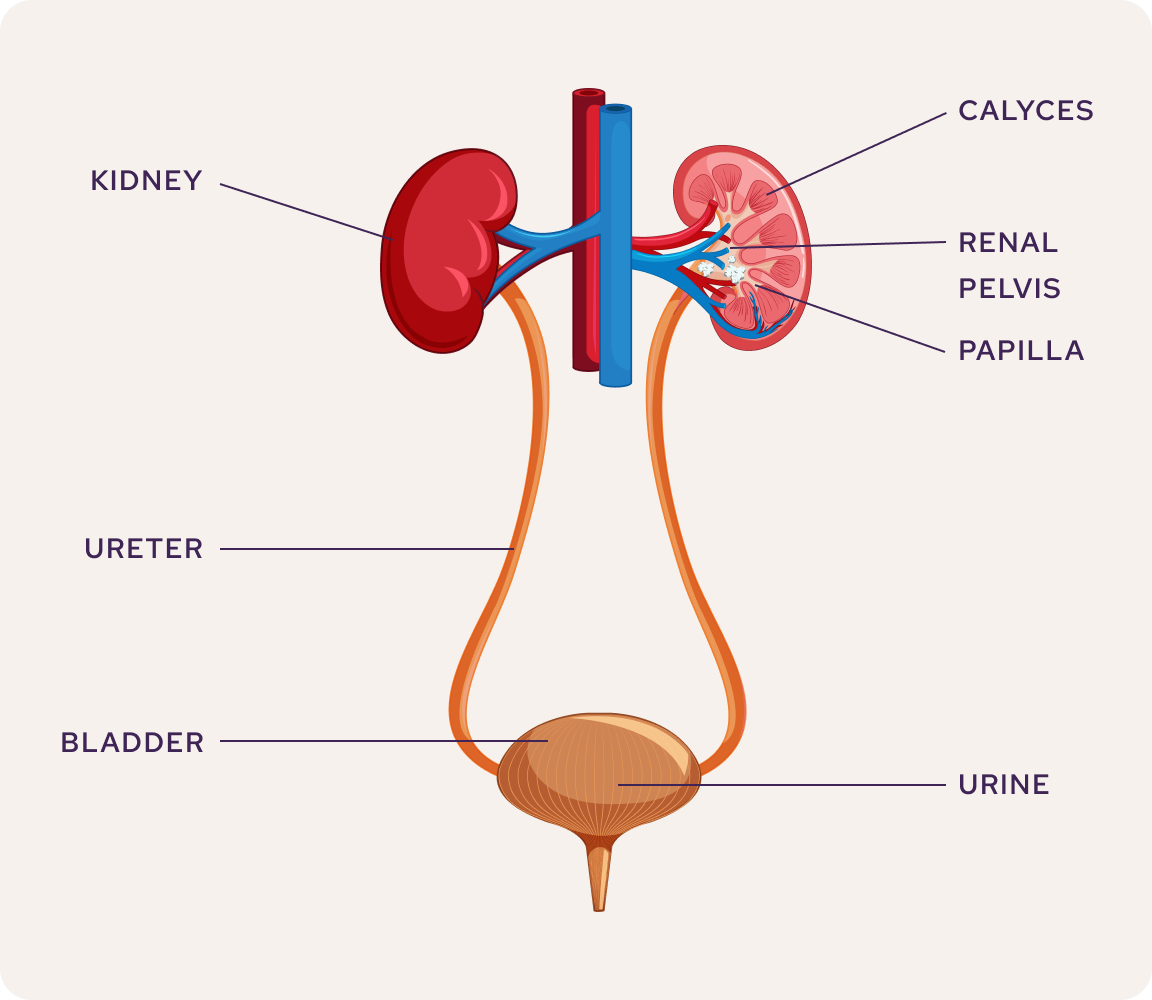
An diagram of the urinary tract showing where kidney stones can occur
A CLOSER LOOK

Where Do Kidney Stones Form in the Body?1

Stones form in the kidneys — the two bean-shaped organs that filter waste from your blood to create urine. But they can move to other places along your urinary tract, including:

Common Kidney Stone Symptoms3

If you experience any of these typical kidney stone symptoms, you should seek medical attention immediately.

Changes in the Color of Your Urine

Blood in the urine is common with kidney stones and can change the color of your urine to pink, red, or brownish.

Flank Pain (Mid-Back, Belly, or Side)

The pain that often signals kidney stones can be sharp and severe or dull, and can spread to your lower abdomen.

Pain or Burning During Urination

While jagged stones move down your urinary tract, they can cause damage that makes urinating painful.

Urgent Need to Urinate

Kidney stones can irritate your ureters and bladder as they move inside your body, causing urinary urgency.

Nausea, Upset Stomach, or Vomiting

Severe pain, nerve irritation, pressure buildup from blocked urine, and infection can all cause nausea.

Fever, Chills, or Other Signs of Infection

If kidney stones block the flow of your urine, bacteria may build up in it, causing a serious infection.

Kidney Stone Treatment Options

Learn about a range of treatments that may be available to you, depending on the size, type, location, and number of kidney stones you have — as well as your symptoms and treatment goals.

A physician in operating room scrubs preparing for a kidney stone procedure
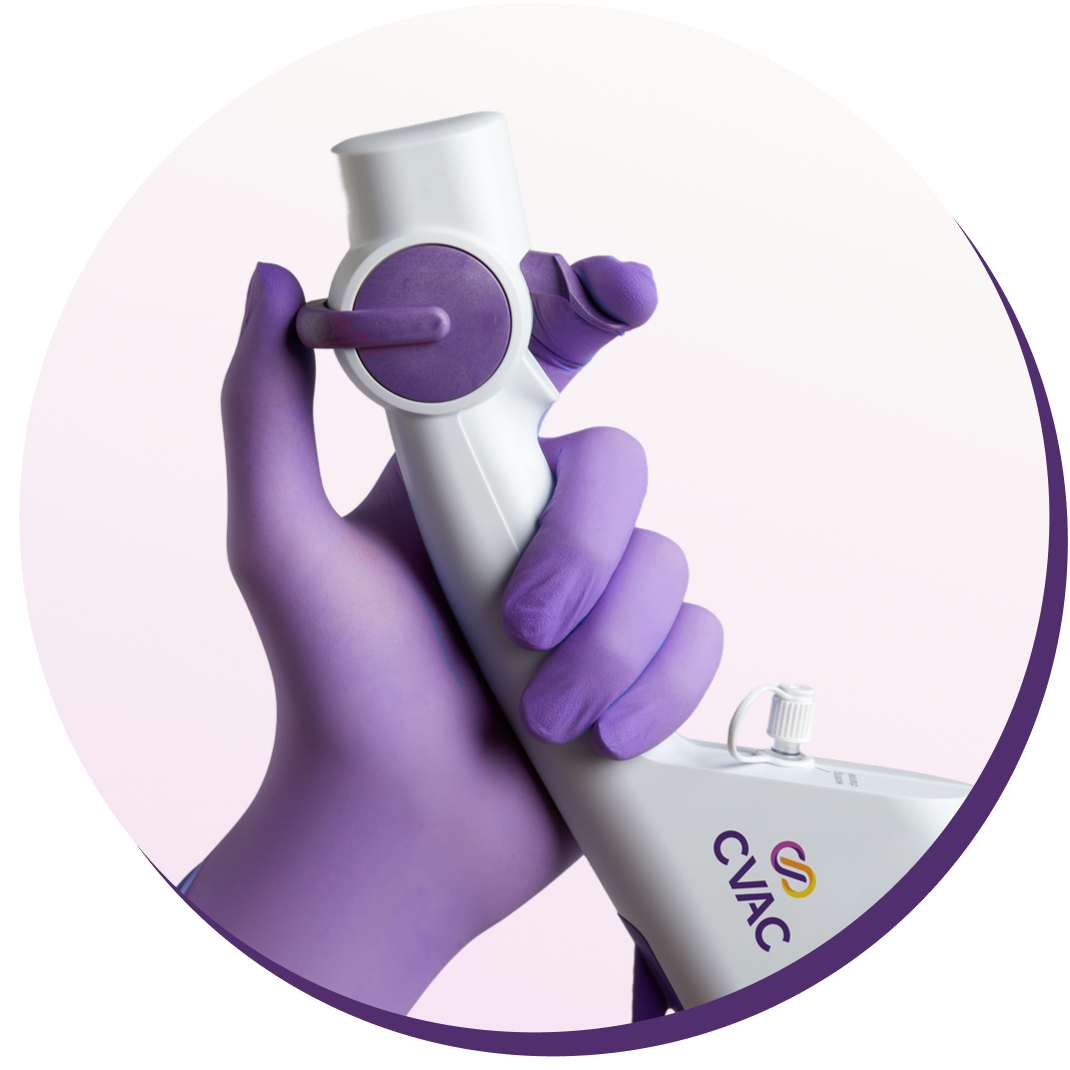
A physician’s gloved hand holding the handpiece of the CVAC System kidney stone treatment

The CVAC System Procedure

Learn about the only minimally invasive treatment specifically designed to help your doctor completely remove kidney stones.5

Frequently Asked Questions

Get answers to common questions about kidney stones.

There are a few ways your doctor can find out what type of kidney stones you have6:

  • Stone analysis — If your doctor collects a stone from you during treatment (or if you pass one on your own, collect it, and give it to your doctor), they can send it to a lab to learn exactly what it’s made of.
  • Medical exam — Your doctor will look for signs of medical conditions that are associated with certain types of kidney stones.
  • Blood tests — A blood test can detect high levels of certain minerals that can lead to stone formation.
  • Urine tests — Whether it’s a simple analysis or a 24-hour collection, your doctor may test your urine to determine the levels and types of stone-forming (and stone-preventing) substances in your system.

If you’re experiencing symptoms that are common in people with kidney stones, you should seek medical attention.3 If your symptoms are severe, you should go to the emergency room as soon as possible. If they are mild, an urgent care clinic or your primary care doctor may be a good starting point to getting the care you need.

If they’re small enough, kidney stones can pass on their own without causing permanent damage. However, this process can take weeks, and as long as the stone is inside your body, there’s a possibility it may grow larger or move to block urine flow or cause other problems.3

50% of people who have kidney stones will have another one within 5–10 years, and 75% will have another one within 20 years.7 There are steps you can take to prevent kidney stones from forming (or regrowing from leftover stone fragments). But even if you take these steps, you may still form kidney stones:

  • Stay hydrated — Drinking plenty of water can make it harder for stone-forming minerals to crystalize in your urine.3
  • Make dietary changes — Limiting salt and animal protein while eating more plant-based foods may help to prevent stone formation.8
  • Stay physically active — Higher levels of physical activity are associated with lower risk of kidney stones.9
  • Seek a treatment option designed to completely remove kidney stones — Leftover stone fragments can serve as anchor points for new crystals to form and grow.10

Ready to Leave Your Kidney Stones in the Dust?

The CVAC System is designed to help your doctor completely remove your kidney stones in a single procedure. Use our locator to find a physician near you.
  1. Leslie SW, Sajjad H, Murphy PB. Renal Calculi, Nephrolithiasis. [Updated 2024 Apr 20]. In: StatPearls [Internet]. Treasure Island (FL): StatPearls Publishing; 2025 Jan-. Available from: https://www.ncbi.nlm.nih.gov/books/NBK442014/.
  2. U.S. Department of Health and Human Services. Chapter 9: Urinary tract stones. In: Litwin MS, Saigal CS, eds. Urologic diseases in America. www.niddk.nih.gov.
  3. Cleveland Clinic. Kidney Stones. My.ClevelandClinic.org. Medically reviewed February 26, 2024. Accessed January 6, 2026. https://my.clevelandclinic.org/health/diseases/15604-kidney-stones.
  4. Khan SR, Pearle MS, Robertson WG, Gambaro G, Canales BK, Doizi S, Traxer O, Tiselius HG. Kidney stones. Nat Rev Dis Primers. 2016 Feb 25;2:16008. doi: 10.1038/nrdp.2016.8. PMID: 27188687; PMCID: PMC5685519.
  5. Matlaga B, Mueller T, Johnson B, Page J, Wolf JS, Preminger G, et al. PD10-04 PROSPECTIVE, RANDOMIZED STUDY OF STEERABLE URETEROSCOPIC RENAL EVACUATION VS URETEROSCOPY WITH BASKETING: 30-DAY RESULTS OF THE ASPIRE STUDY. Journal of Urology. 2024 May 1 [cited 2025 Nov 5];211(5S):e186. Available from: https://doi.org/10.1097/01.JU.0001008748.59024.cb.04.
  6. UMass Memorial Health. Kidney Stones — Your Evaluation. Accessed November 17, 2025. https://www.ummhealth.org/health-library/kidney-stones-your-evaluation.
  7. Moe, Lancet 2006, 367: 333-344.
  8. Ferraro PM, Bargagli M, Trinchieri A, Gambaro G. Risk of Kidney Stones: Influence of Dietary Factors, Dietary Patterns, and Vegetarian-Vegan Diets. Nutrients. 2020 Mar 15;12(3):779. doi: 10.3390/nu12030779. PMID: 32183500; PMCID: PMC7146511.
  9. Ding X, Du Q, Li J, Ji C, Zhang E, Hu W. Prevalence of kidney stones based on metabolic health and weight criteria: reports from the national health and nutrition examination survey 2007-2018 data analysis. Front Physiol. 2025 Jun 23;16:1625100. doi: 10.3389/fphys.2025.1625100. PMID: 40626049; PMCID: PMC12230011.
  10. Cicerello E, Merlo F, Maccatrozzo L. Management of Clinically Insignificant Residual Fragments following Shock Wave Lithotripsy. Adv Urol. 2012;2012:320104. doi: 10.1155/2012/320104. Epub 2012 May 31. PMID: 22701479; PMCID: PMC3371344.
MAC00270-01.A
Individual results may vary. Speak with your doctor to determine what treatment may be right for you. There are risks of complications with the CVAC System procedure including, but not limited to: perforation, bleeding, damage to ureter or kidney, pain, inflammation, infection, and/or fever. In some cases, complications may require intervention and may lead to a serious outcome. View full safety information here.
MAC00270-01.A

Contact Us for More Information About the CVAC System Procedure

This field is for validation purposes and should be left unchanged.
Checkboxes(Required)

MA00171-01.A